When your nervous system has a hard time finding its way back to baseline.
SAFE AND SOUND PROTOCOL
The Safe and Sound Protocol uses specially filtered music to give your nervous system another way to practice regulation—without having to think or talk your way there.
Sometimes your nervous system gets stuck
in high gear. Sometimes it shuts down.
Have you noticed you're quick to snap, react, or explode over things that wouldn't normally rattle you? Maybe everything feels like too much—the sound of someone chewing, a room that's too loud, a to-do list that shouldn't feel this heavy—and all you want is a way out. Are you stuck in a loop of reacting, rupture, and repair?
Or maybe it's the opposite. Some days you can't find the energy to care about much of anything, going through the motions of your own life without ever quite feeling like you're in it.
Your nervous system is doing what it was built to do: notice potential threats and respond, using the tools it has—rev up or shut down. Sometimes, though, it can get stuck responding that way even when the threat is no longer present. And being stuck is exhausting, whether you're up or down.
The goal isn't to dig into any one story. It's to give your nervous system an opportunity to practice something different: finding a steadier baseline and moving through life's ups and downs without tipping so quickly into overwhelm.
The goal isn’t constant calm. It’s having more room to respond.
The Safe and Sound Protocol™ (SSP) is an evidence-based therapeutic listening program that uses specially filtered music to support nervous-system regulation.
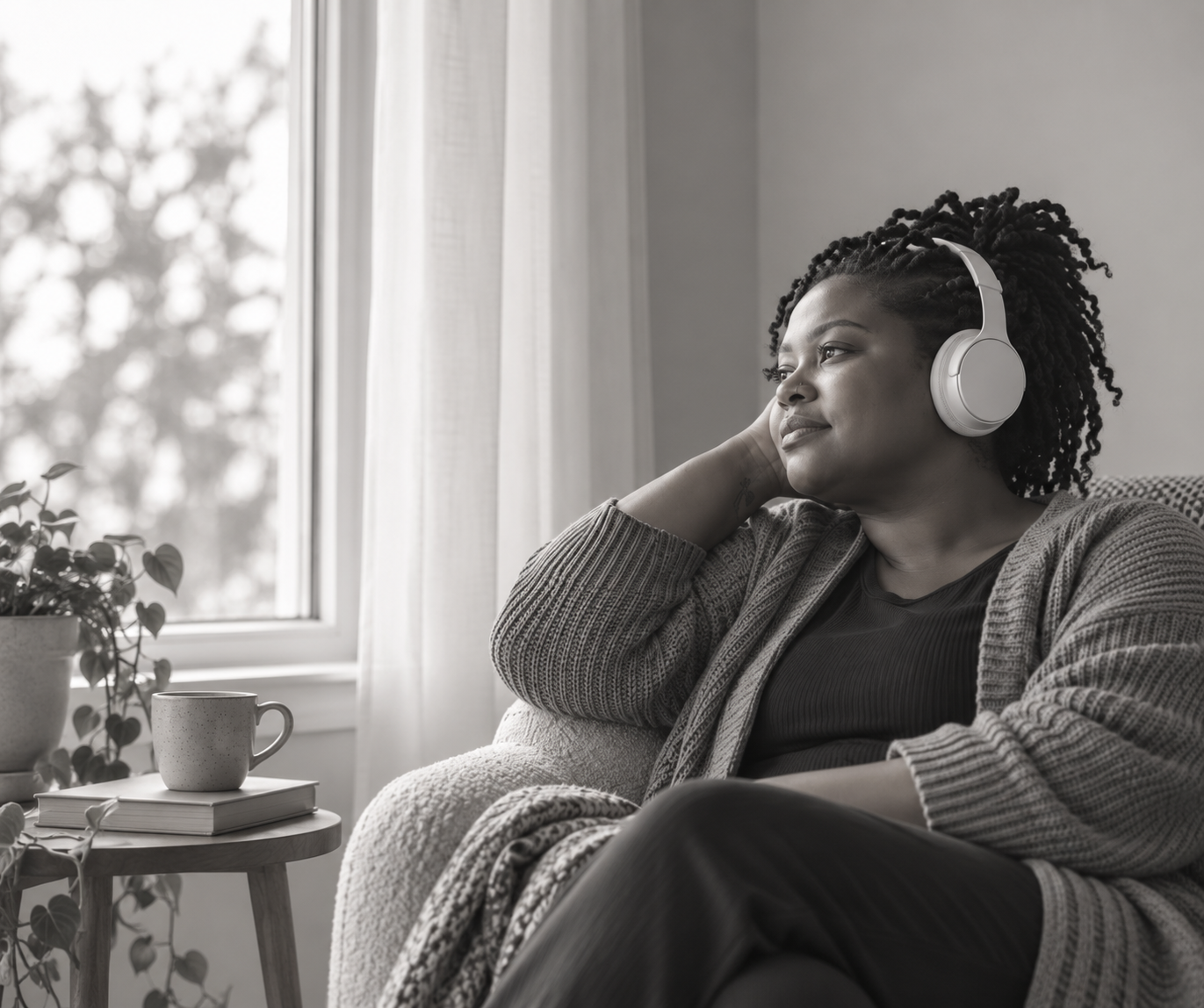
Developed from the work of Dr. Stephen Porges and Polyvagal Theory, SSP works through sound rather than asking you to think, talk, or logic your way into feeling differently. You listen through over-ear headphones while we pay attention to how your nervous system responds and adjust the pace along the way.
Sounds a little like science fiction, doesn't it? I promise it's not.
What is the Safe and Sound Protocol?
Sounds, touch, crowds, transitions, or other sensory experiences feel overwhelming
Your nervous system tends to stay “on”—scanning, bracing, reacting, or having trouble settling
Big feelings lead to meltdowns, shutdowns, or difficulty bouncing back
Anxiety or stress seem to show up in your body before you can think your way through them
Connection can feel difficult, even with people you care about
Trauma or early experiences continue to influence how your nervous system responds
You're looking for an approach that doesn't depend entirely on talking things through
SSP can be worth exploring if:
SSP isn’t one-size-fits-all. How we move through the program depends on you—what you notice, how your nervous system responds, and what feels manageable along the way.
Here’s what you can expect:
So, what does this actually look like?
-
SSP involves listening to five hours of specially filtered music, but that doesn’t mean you sit down and listen for five hours—or even that everyone moves through it at the same pace.
Some people find the music comfortable right away. Others notice stronger responses and do better with shorter listening periods. We’ll pay attention to what your nervous system is telling us and adjust the pace along the way.
We’re trying to notice the whispers, not the screams. This is a time to move slowly and with intention, tune into your body, and follow its lead.
-
There isn’t one set schedule for SSP. Most clients begin by listening with me during our sessions—either in person or virtually—starting slowly and increasing listening time as we learn how your nervous system responds.
Every session depends on what you’re carrying that day and what your nervous system can hold. We’ll notice what’s changing, talk through what you’re experiencing, and adjust the pace from there.
Once you’ve moved through the program and your nervous system is responding well, we may transition to more independent listening with regular check-ins.
-
Yes! SSP can be used with both children and adults. For kids, this works best when they have an adult involved in the process so we can all notice what comes up, understand their responses, and carry what we’re learning into everyday life.
How that looks will depend on the child—their age, needs, and how their nervous system responds to listening.
-
Sure can! You don't have to become an ongoing therapy client to work with me through SSP.
Some people incorporate SSP into therapy we're already doing together. Others come to me specifically for SSP while continuing to work with another therapist or provider. We'll talk about what you're hoping to address and decide what kind of support makes sense for you.
-
SSP has a $333 out-of-pocket access fee, which gives you 6 months of access to the listening program through the Unyte app. The fee also includes provider monitoring, pacing recommendations, and SSP-related support between sessions.
If your nervous system needs more time—and sometimes it does—access can be extended for $177 for an additional 3 months.
Therapy sessions and supported listening sessions are billed separately at my usual session rate and may be eligible for insurance coverage depending on your plan. The SSP access fee cannot be billed to insurance.
Ready to try something different?
If SSP feels like something you’d like to explore for yourself or your child, reach out. We’ll start with what you’ve been noticing and move from there.